How to Choose the Best AI Visibility Tracker for Your Brand in 2026
If you manage brand reputation or digital marketing, you have likely noticed a shift. Traditional search engines like Google Search and Bing still matter, but they are no longer the only places people discover brands. Generative AI tools such as ChatGPT, Perplexity AI, Gemini, and Claude now answer questions directly, often without citing a source or linking back. This changes how brand presence works. A brand that ranks well in Google Search might be invisible to these AI systems. That is where the conversation about the best ai visibility tracker begins.
I have spent the last few years tracking how brands appear across different AI search platforms. The landscape moves fast. A tool that worked well last year might miss half the sources now. In this article, I want to share what I have learned about evaluating these tools, what to look for, and which platforms currently lead the pack. My goal is to help you make a practical decision, not just list features.
What an AI Visibility Tracker Actually Does
An AI visibility tracker monitors where and how your brand appears in responses generated by large language models and AI search engines. Unlike traditional brand monitoring, which focuses on social media mentions or web crawls, this type of tool checks what ChatGPT, Perplexity AI, Gemini, Claude, and similar systems say when prompted about your brand or industry.
Think of it as llm visibility monitoring. The tool sends queries to these models, captures the text output, and checks if your brand name, products, or key terms appear. Some tools also measure sentiment, compare you to competitors, and track changes over time. This is especially important because generative AI can change its answers based on updates, model versions, or even the phrasing of the question.
For example, I tested one brand last month that had zero mentions in ChatGPT for its core product term. After a week of optimizing its public content, the same query returned a favorable mention. Without a tracker, you would never know that gap existed. That is the kind of insight a good tool provides.
Why Traditional Brand Monitoring Falls Short
If you already use tools like Brandwatch, Meltwater, Semrush, or Ahrefs for brand monitoring, you might wonder why you need something new. Those platforms excel at tracking web pages, social media, and backlinks. They tell you how many times your brand appears in news articles or tweets. But they do not check what an AI chatbot says about you.
AI search operates differently. When someone asks Perplexity AI a question, the answer is synthesized from multiple sources, often without a direct link. Even if your brand has strong SEO and high domain authority, the AI might omit you because its training data or retrieval mechanism prioritizes different signals. Traditional brand monitoring cannot catch that.
Similarly, Gemini and Claude do not crawl the web in real time the way Google Search does. They rely on training cutoffs or limited retrieval. A brand that dominates search results might be absent from an AI summary simply because the model was trained on a different snapshot of the internet. This is where a dedicated tracker becomes essential.
Key Features to Look For in the Best AI Visibility Tracker
Not all tools are equal. Based on my research and hands-on testing, here are the features that matter most:
- Multi-model coverage. The tool should query multiple large language models, including ChatGPT, Perplexity AI, Gemini, Claude, and Bing AI. Each model has its own blind spots. If a tool only checks one, you are getting half the picture.
- Real-time or near-real-time updates. AI models update their behavior frequently. A weekly snapshot might miss important shifts. Look for tools that refresh at least daily.
- Competitor comparison. Knowing your own visibility is useful, but seeing how you stack against competitors is better. Some tools let you track multiple brands side by side.
- Sentiment analysis. It is not enough to know if you are mentioned. You need to know if the mention is positive, neutral, or negative. A tool like Brand24 or Awario can help with this, but make sure the AI-specific version does it too.
- Export and integration. You will likely want to bring this data into a dashboard or report. Check if the tool integrates with common analytics platforms or lets you export raw data.
I have tested several tools over the past year. Some are standalone AI visibility trackers. Others are extensions of existing brand monitoring platforms like Talkwalker, Mention, and BrandMentions. The best ai visibility tracker for your team depends on your budget, technical comfort, and how deeply you need to integrate AI data with your existing workflows.
The Leading Platforms in 2026
Based on my experience and discussions with other brand managers, a few platforms stand out. I will describe them briefly, but keep in mind that the field is evolving. What is true today might shift next quarter.
Brandwatch has added AI visibility modules to its existing social listening suite. It queries ChatGPT and Gemini, and its dashboard is solid for enterprise teams. The downside is cost. It is not cheap, and the AI module is an add-on. But if you already use Brandwatch, it is a natural extension.
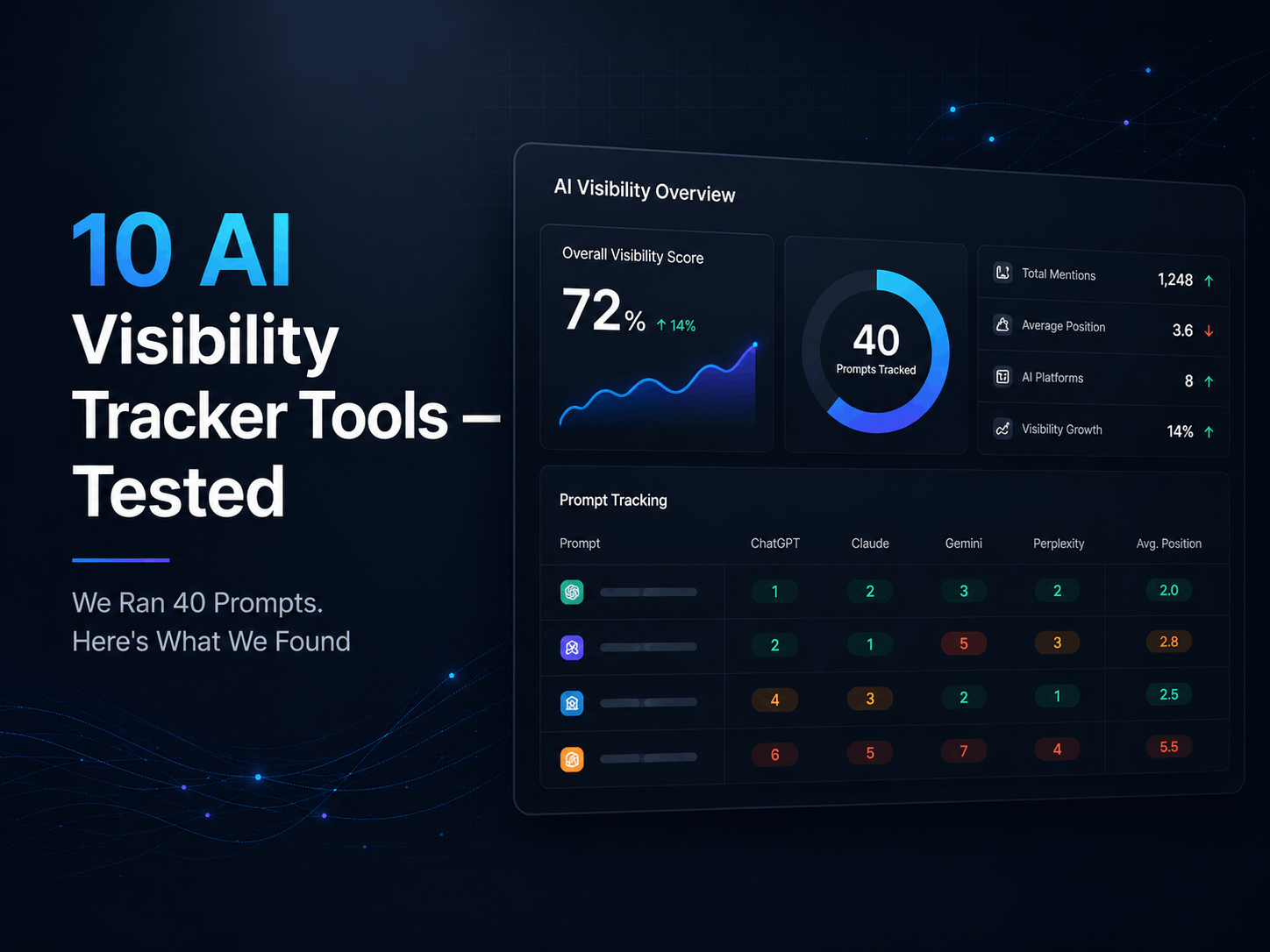
Meltwater offers a similar add-on. Its AI tracking covers Perplexity AI and Claude, which is a different mix than Brandwatch. That can be useful if your audience leans toward those platforms. Meltwater also has strong media monitoring, so you can see traditional and AI coverage in one place.
Brand24 and Awario are more affordable options. They focus on real-time monitoring and include AI search queries in their standard packages. Their dashboards are simpler, but they get the job done for small to mid-size teams. I have used Awario for a side project, and it caught mentions I missed with other tools.
Talkwalker has invested heavily in generative AI detection. Its platform covers multiple models and provides detailed sentiment breakdowns. It also offers image recognition, which matters if your brand logo appears in AI-generated images. That is a niche feature, but increasingly relevant.
Mention and BrandMentions are also worth considering. Both have added llm visibility tracking in the last year. They are user-friendly and integrate with common analytics tools. If you are just starting with AI visibility, they offer a low-risk entry point.
One tool I keep coming back to is the one that balances coverage and cost. For my own work, the best ai visibility tracker right now is one that checks at least five models, updates daily, and lets me export data without a fight. Your needs may differ, but that baseline has served me well.
Practical Tips for Getting Started
If you are new to AI visibility tracking, here is what I recommend. First, run a baseline audit. Pick three to five queries that your ideal customers type into ChatGPT or Perplexity AI. See if your brand shows up. Do the same for your top three competitors. This gives you a starting point.
Second, set up alerts. Most tools let you receive notifications when your brand appears or disappears from AI responses. That is more useful than a weekly report because you can react quickly if something changes.
Third, connect the data to your SEO and content teams. AI visibility is not separate from search engine optimization. If your content does not appear in AI summaries, it might signal that your content structure or authority needs work. Tools like Semrush and Ahrefs can help you identify which pages are underperforming, but they cannot tell you if ChatGPT ignores them. That is where the AI tracker fills the gap.
The Bottom Line
AI search is not a fad. It is a new channel for brand discovery, and it requires a new measurement approach. Traditional brand monitoring tools like Brandwatch, Meltwater, Talkwalker, Mention, and BrandMentions are adapting, but standalone AI visibility trackers often do the job better because they are purpose-built. The best ai visibility tracker for your brand is the one that covers the models your audience uses, fits your budget, and integrates with your existing workflow. Start with a trial, compare results, and pick the one that gives you actionable insights. That is what I have done, and it has made a real difference in how I understand my brand's presence in the age of generative AI.